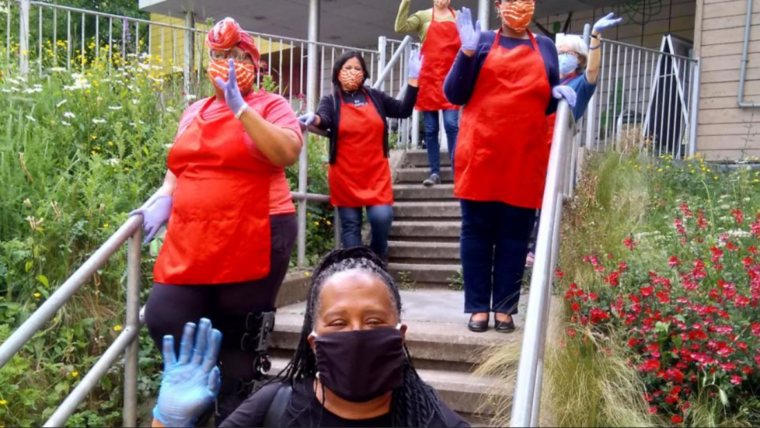

In today’s newsletter by Ruby Tandoh, perhaps you will decide if the Granville sits within London’s long tradition of charitable missions or if it breaks free of that mould. Either way, we should all be paying attention to the work Dee Woods and Leslie Barson are doing, somewhere just off Watling Street, where food is not something dictated on or given by a well meaning saviour, but created with and by the community. By subtly reframing who it’s by and who has agency, it’s a model that radically goes beyond the strictures of the food banks and the soup kitchen. And perhaps, even if the Granville’s garden with its callaloo and echinacea plants, is buried into London’s topsoil, it too will lie dormant, waiting for the next generation to pick it up.
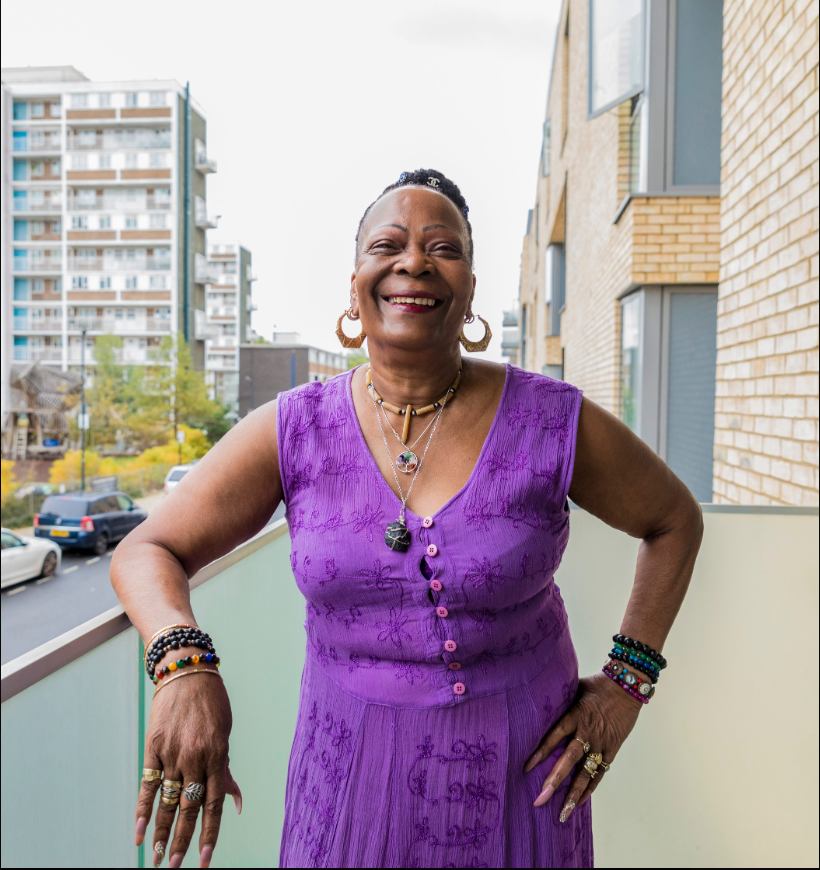
Merle Barriteau never forgets the meals she’s cooked – or the people who ate them. One regular to her diner was a schoolteacher named Barry. “He had this thing about fried dumpling,” she remembers. “He would always come in and eat fried dumpling and have his drink.” There was a music group who would order the fried snapper. Princess Anne once stopped by (though Merle is disappointed that she’d already had lunch). Sometimes the Trinidadian actor and Eastenders star Rudolph Walker came down. “He wasn’t an eater, but he’d have the Guinness punch, he’d have the pineapple punch.”
Drawn in by the promise of curry mutton, sky juice and rice and peas, diners would drift into Merle’s busy orbit, perching in the kitchen while she talked and tended to her food, or clustered around the tables in the dining area. Lunchtimes were particularly busy. Workmen in hi-vis vests, policemen, cricketers and pop star entourages all came and went, some idling a while amid the chat and clatter, others hot-footing it back across the courtyard before the parking warden could slap a ticket on the windscreen of their van. “Everybody had their own food that they enjoyed,” Merle laughs, and she knew each and every one. “There wasn’t nothing that they didn’t want.”
It was 1985, maybe, that Merle first started cooking at The Granville. Maybe, because it’s only when it comes to dates that Merle’s memory falters: she traces backwards from the age of her eldest child, adding and subtracting numbers until she settles somewhere around the mid-80s. Nestled in the shade of a tree-lined street, and flanked by a primary school and modest residential blocks, the building is perhaps an unlikely place to set up a food business. Nearby Kilburn High Road (a thoroughfare into and out of London since Roman times), is a hub for eating, drinking and spending. The Granville, by contrast, is a community centre in a residential area: a place through which people, not money, seem to flow. But wherever there are people, there is feeding to be done. In this building – where dance troupes, art classes and home education groups met and worked – in a part of the city that was, at the time, a hotspot for Caribbean culture, Merle met local appetites with apple punch, hard food and jerk chicken.
Born in Trinidad to Grenadian parents, Merle grew up cooking. “When I was young, you learned how to cook, you learned how to clean. This is just how things were.” But she was never content to just feed people – she wanted to delight them. From oxtail to chana and roti, Merle slowly expanded her repertoire. Through Jamaican friends, she learned about ackee and saltfish. She learned how to fry flying fish the Bajan way. By the time she started cooking at The Granville – where she worked informally for a while, slowly turning it into a full-time endeavour as her renown spread – she could cook her way across the West Indies with accomplished ease.
Within a few years, Merle’s Diner was in full swing, the smell of simmering stews rising from the basement kitchen while eaters streamed in. Robyn Stone, the sister of Merle’s husband at the time, would often stop by with friends. “I used to go out of my way to go there. Merle’s food was really good.” She remembers Merle’s generosity with portion sizes, and her refusal to let any visitor leave hungry. “Merle has a lot of respect from people in the area. She’d always chuck something extra in if people were broke.” Sat somewhere between a community kitchen and a restaurant, Merle’s Diner enacted culinary perfectionism without financial ambition. “I got by,” Merle notes, “but I didn’t do it to make a profit. By the end, a big plate of food was £4, £5. This was food for the community. That’s what mattered.”